|
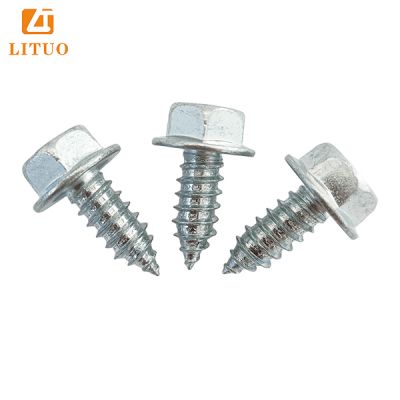
Material |
Carbon Steel: C1022A |
|
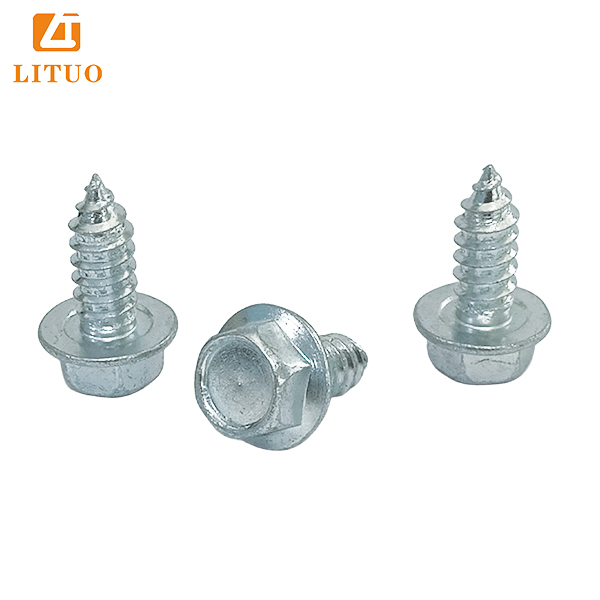
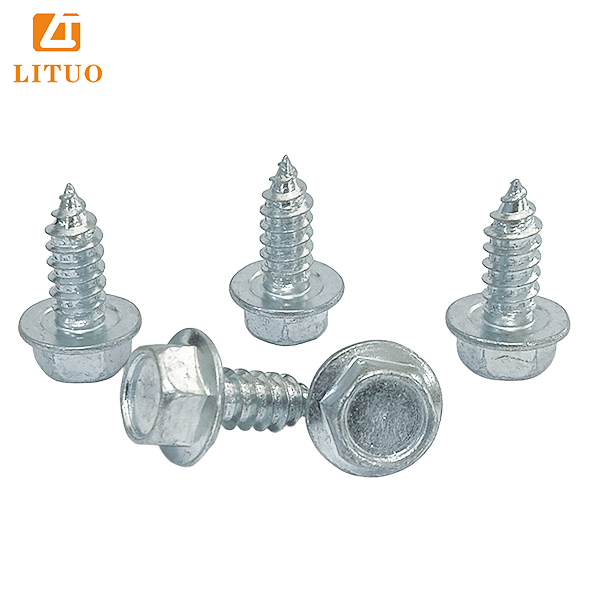
Head Style |
Hex |
|
Point Style |
Self Tapping |
|
Exterior Finish |
Zinc |
|
Thread Size |
#12/#14/#16 |
|
Length range |
19-200mm |
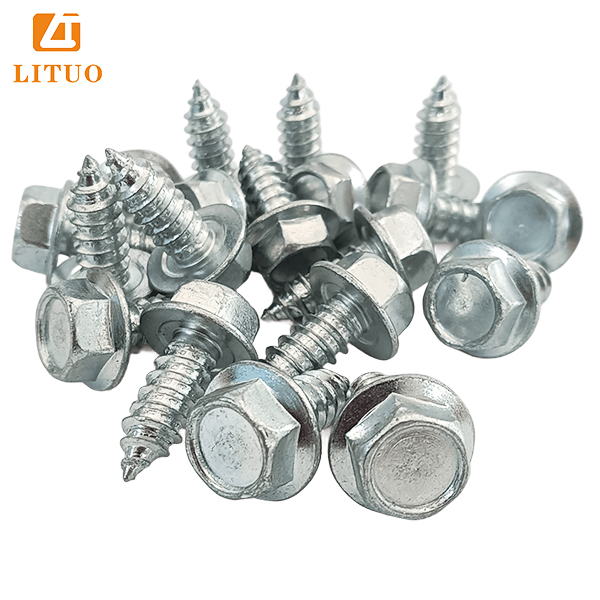
Hex Washer Head Self-Tapping Screws: The "All-Round Connector" in Modern Assembly
In home repairs, small-scale manufacturing, and even large-scale engineering projects, one seemingly small yet crucial fastener is ubiquitous – the hex washer head self-tapping screw. This design, which highly integrates functionality, convenience, and reliability, has become the preferred solution for connecting different materials. It's not just a screw; it's an ingenious engineering achievement in modern assembly technology.
Structural Analysis: The Wisdom Behind the Design
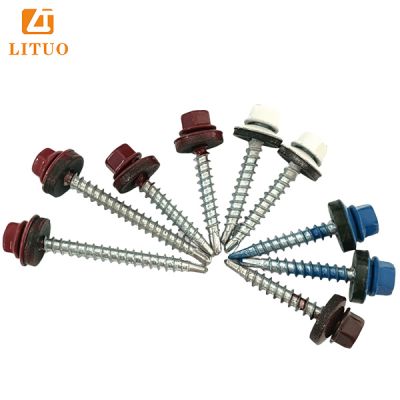
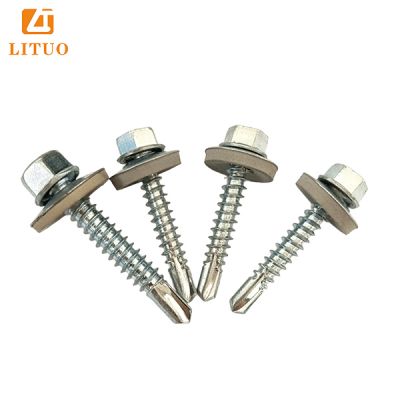
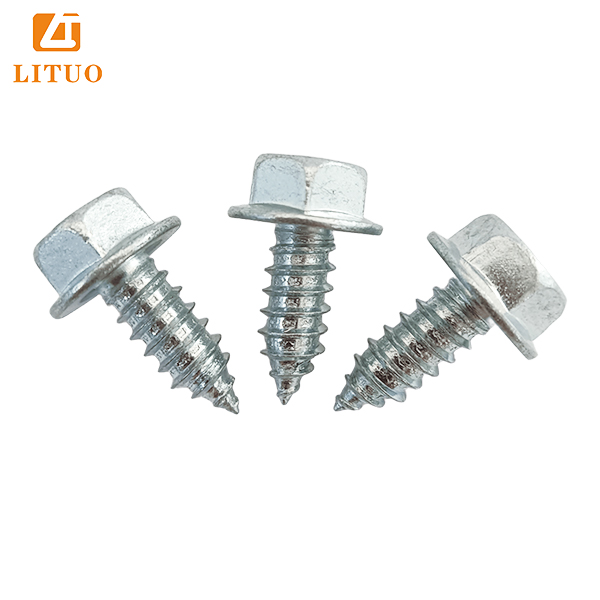
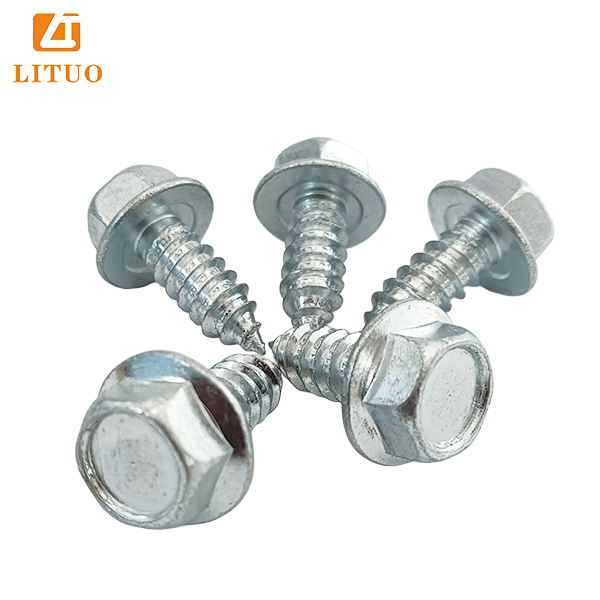
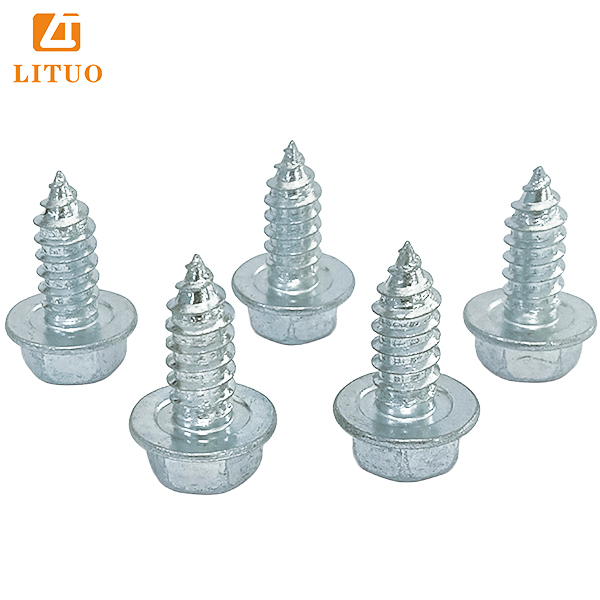
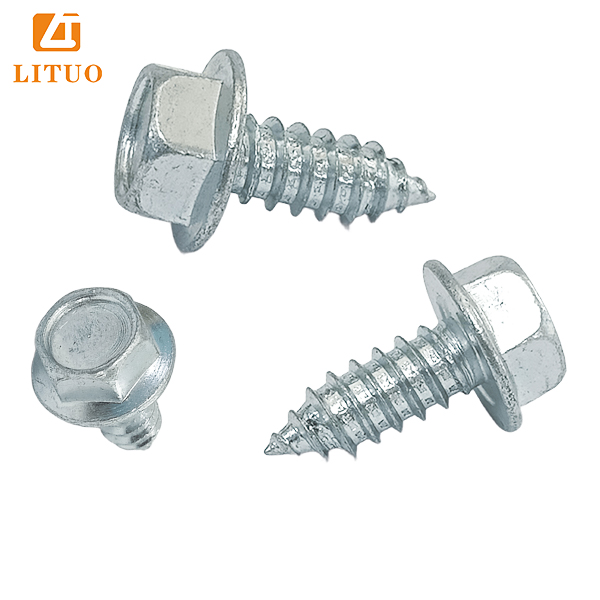
The name of the hex washer head self-tapping screw reveals its core features. The hexagonal head design is specifically for efficient torque transfer using tools such as wrenches or sockets. Compared to Phillips or slotted heads, it can withstand greater tightening forces, effectively reducing the risk of tool slippage, and performs exceptionally well in applications requiring high pre-tension. The integrated washer (or flange head) under the head is the essence of the design: it increases the bearing area, distributes pressure, closely fits the connected surface, prevents loosening, and protects the material from compression damage. This design is especially important for thin sheets, plastics, and other soft materials.
The self-tapping capability of the screw stems from its unique thread geometry. The threads are sharper, with a larger pitch, and the end is tapered or has a pilot point, allowing it to "cut" matching threads into the material like a tap, rather than simply "compressing" it. The full-thread design of the shank ensures complete engagement from head to end, providing even stress distribution.
Working Principle: Why Can It "Self-Tap"?
Self-tapping screws do not require pre-tapping of internal threads. Their operation involves two steps: first, the drilling or penetration stage, where the sharp end guides the screw into position and cuts into the material under pressure; second, the thread forming stage, where the cutting grooves or special thread profile of the screw shape a matching internal thread in the material, forming a tight mechanical interlock. For metals, it mainly relies on tip cutting; for plastics or wood, it is achieved more through material displacement and compression. Pre-drilling (pilot holes) is not always necessary, but when installing in hard materials or near edges, it prevents cracking, ensures proper alignment, and reduces driving torque.
Application Scenarios: A Versatile Solution from Home to Industry
The material versatility of this type of screw is its greatest advantage. Whether fastening sheet metal to a wooden frame, installing metal fittings on a plastic casing, or assembling components in composite materials (such as fiberglass), it performs reliably. Common applications include:
Home Repair: Securing metal door and window frames, installing light steel framing, furniture repair, and assembling appliance casings.
HVAC: Connecting ductwork and installing bra
Automotive Interiors and Body Panels: Securing interior panels and repairing body panels.
Electronic Equipment Assembly: Securing chassis, panels, and internal brackets.
Outdoor Facilities: Installing signs, awnings, fences, etc.
Selection and Usage Guide: Ensuring Successful Connections
Choosing the right self-tapping screw requires considering:
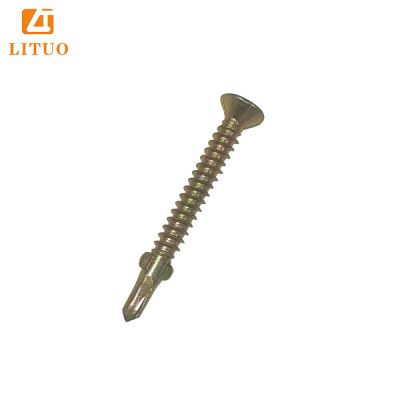
Material Compatibility: Self-drilling screws (with a self-drilling tip) are suitable for thicker steel plates; blunt-tipped screws require pre-drilling and are used for thin sheets or soft materials. Stainless steel screws offer corrosion resistance, while galvanized carbon steel is more cost-effective.
Size Specifications: Diameter and length should be determined based on material thickness and required engagement depth, generally ensuring the screw protrudes at least 2-3 thread pitches from the connected part.
Driving Tools: While manual wrenches can be used, a cordless impact driver is an efficient choice. It combines high-speed rotation with axial impact force, easily driving screws and setting a tight clamping force, significantly improving work efficiency, especially for batch work or hard materials.
Installation Techniques: Keep the screw perpendicular to the workpiece surface; apply steady pressure at the start, then drive at a constant speed once the threads engage; avoid overtightening to prevent stripping or material damage; consider using coated screws or adding sealant in corrosive environments (such as outdoors).
Advantages and Limitations: A Realistic View of its Capabilities
Significant Advantages: Simplifies the installation process, reduces the need for additional components like nuts and taps, and lowers inventory costs and assembly time. It provides reliable mechanical locking force and maintains stability in vibrating environments (with washers). However, it also has limitations: it is generally not used in applications requiring frequent disassembly, as repeated assembly and disassembly can damage the formed threads; for extremely high-strength or high-vibration applications, traditional bolt and nut combinations may be more reliable; and its use may be limited on very hard or brittle materials.
Market and Trends: Continuously Evolving Small Parts
With the development of manufacturing, self-tapping screws are also constantly innovating. Surface treatment technologies (such as Dacromet and zinc plating) have improved corrosion resistance; new materials (such as titanium alloys and high-strength engineering plastics) have expanded the application range; and intelligent assembly tools can precisely control torque and angle, ensuring consistency. In addition, environmental regulations are driving the development of green processes such as chromium-free coatings.
In summary, the hex washer head self-tapping screw is a prime example of engineering ingenuity integrated into everyday life. With its clever design, it combines drilling, tapping, and fastening into one, significantly improving the efficiency and reliability of fastening operations. Whether you are a professional technician or a DIY enthusiast, understanding its principles and mastering the correct selection methods will allow you to achieve secure and durable connections in various projects, making creation and repair more convenient and efficient.